
Chinese Celadon
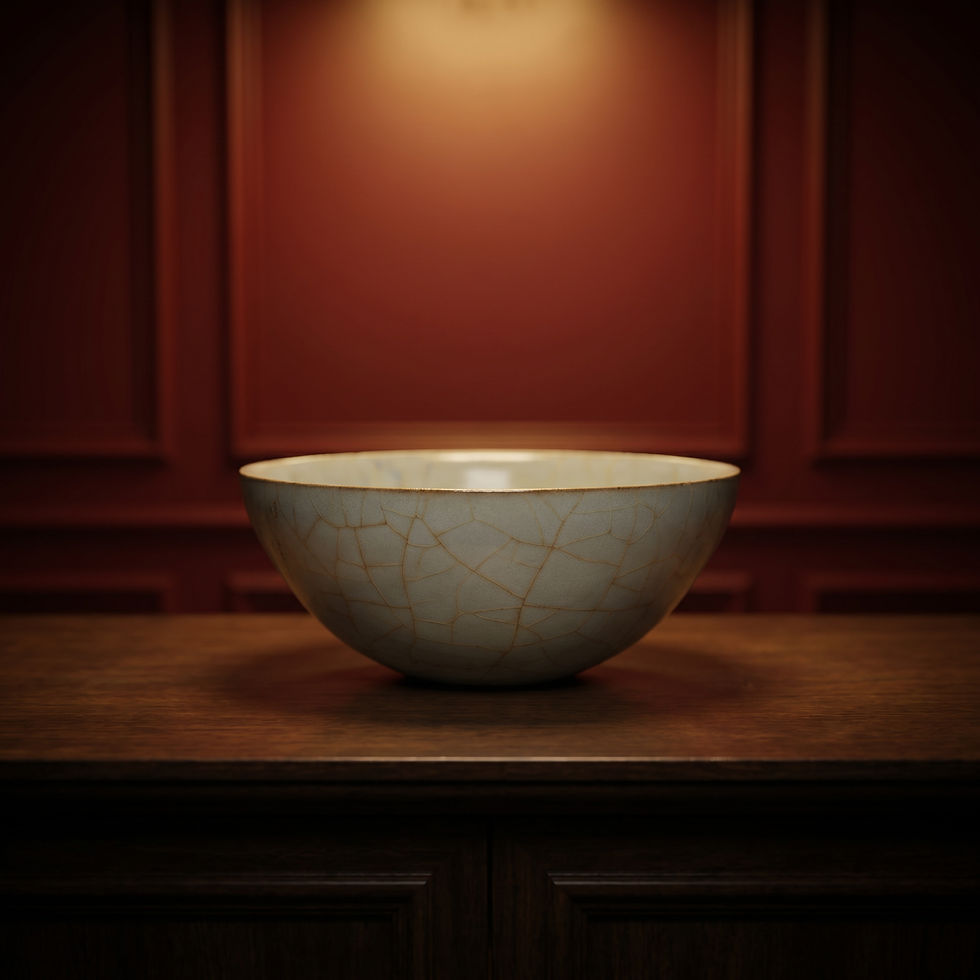
Chinese celadon — the family of stoneware and porcelain glazed in the soft grey-greens and blue-greens that evoke jade — has been produced in China for more than a thousand years. Longquan celadon from Zhejiang province, made at its peak during the Song and Ming dynasties, is the most prized and most collected. Austin Auction Gallery sells and appraises Chinese celadon across all periods and forms.
What it's Worth
Value in Chinese celadon ranges from modest to extraordinary depending on period, kiln, and quality. Modern Longquan studio pieces bring $50–$500. Quality Qing dynasty and Republic period celadon pieces in the Longquan manner bring $200–$2,000. Genuine Ming dynasty Longquan pieces in good condition bring $1,000–$15,000. Genuine Song dynasty Longquan pieces bring $3,000–$50,000+. The rarest imperial Song wares — Ru ware and Guan ware — are among the most valuable ceramics in the world; a single Ru ware brush washer sold at Sotheby's Hong Kong in 2017 for HK$294 million (approximately $37.7 million USD). Jun ware with confirmed Song period attribution and fine purple splashes brings $2,000–$30,000+.
Modern studio pieces $50–$500; Qing/Republic period $200–$2,000; Ming Longquan $1,000–$15,000; Song dynasty $3,000–$50,000+
Our Sold Results


Recently Sold
And Many More
Overview & History
Celadon glazes — achieving their characteristic grey-green, sea-green, or blue-green color through the reduction of iron oxide in the kiln atmosphere — were developed in China during the Han dynasty and refined over the next millennium into one of the great ceramic traditions of the world. The goal was always the same: to capture in fired clay the translucent depth and color of nephrite jade, the most revered material in Chinese culture.
Longquan celadon, produced in the kilns of Zhejiang province, is the most celebrated of all Chinese celadons and the one most encountered in serious collections. At its Song dynasty peak (960–1279), Longquan produced celadon of extraordinary quality: a thick, lustrous glaze ranging from pale grey-green ('plum green,' or meiziging) to a deeper blue-green ('powder blue,' or fenyuging), applied over a white or grey stoneware body and pooling in the carved or molded decoration to create areas of deeper color. Song Longquan vases, dishes, and incense burners are among the most valuable Chinese ceramics in existence. Ming dynasty Longquan continued the tradition with somewhat heavier forms and a slightly different glaze character.
Other important Chinese celadon traditions include Ru ware (the rarest and most prized Song imperial ware, produced for fewer than 20 years in the late Northern Song; only about 90 known surviving pieces), Guan ware (the Southern Song imperial kiln celadon, with characteristic crackle glaze), Jun ware (the distinctive opalescent blue-grey to lavender glaze with occasional purple splashes), and the broad 'southern celadon' tradition from Fujian and Guangdong provinces that supplied export markets from the Song through the Ming.
In Texas estate sales, Chinese celadon most commonly appears as Longquan style vases, bowls, and figures in the Song and Ming manner — ranging from genuine period pieces to quality Qing dynasty and Republic period reproductions. Large blue celadon baluster vases and lidded melon jars are particularly common. Modern Chinese studio celadon, made in the Longquan tradition by contemporary kilns in Zhejiang, is of excellent quality and is collected in its own right.
Identifying & Marks
Genuine Song and Ming Longquan celadon is identified by its glaze character, clay body, and construction details. Period Song Longquan shows a grey stoneware body (visible at the unglazed foot rim), small spur marks on the base where the piece rested in the kiln, and a glaze of characteristic depth and subtle color variation — pooling darker in carved channels and recessed areas. The glaze surface has a waxy, semi-matte quality that differs from the shinier glazes of Qing and later reproductions. Ming Longquan tends toward heavier forms and a slightly more uniform glaze. Thermoluminescence (TL) testing can date the firing of a piece and is the standard tool for authenticating high-value celadon. Most Chinese celadon is unmarked; pieces with reign marks should be assessed carefully as the marks may be apocryphal. Modern studio Longquan often carries impressed or painted marks from the contemporary kiln.
FAQ
What makes Song dynasty celadon so much more valuable than later pieces?
Song dynasty (960–1279) Longquan celadon represents the technical and artistic peak of the tradition — a thick, lustrous glaze with a depth and subtlety of color that later periods rarely matched, applied over forms of great restraint. Genuine Song pieces are also simply rarer, having survived nearly a thousand years. The rarest Song imperial wares, Ru ware and Guan ware, are among the most valuable ceramics in the world — a single Ru ware brush washer sold at auction in Hong Kong for roughly $37.7 million in 2017.
How do I know if my celadon piece is old or a modern reproduction?
Genuine Song and Ming Longquan celadon shows a grey stoneware body visible at the unglazed foot rim, small spur or ring marks on the base from the kiln firing process, and a glaze with a waxy, semi-matte quality that pools darker in carved recesses. Modern studio reproductions, however well made, typically show a shinier, more uniform glaze and different footrim characteristics. Thermoluminescence (TL) testing is the standard scientific method for dating the firing of a high-value piece.
What is my Chinese celadon piece worth?
Modern Longquan studio pieces bring $50–$500. Quality Qing dynasty and Republic period celadon in the Longquan style brings $200–$2,000. Genuine Ming dynasty Longquan brings $1,000–$15,000. Genuine Song dynasty pieces bring $3,000–$50,000 or more, with the rarest imperial wares reaching into the millions. A specialist assessment is the only reliable way to know which category your piece falls into.