
Category:
Country of Origin:
Founding Date:
Asian Art
China
Home / Makers & Brands /
Cloisonné
Cloisonné
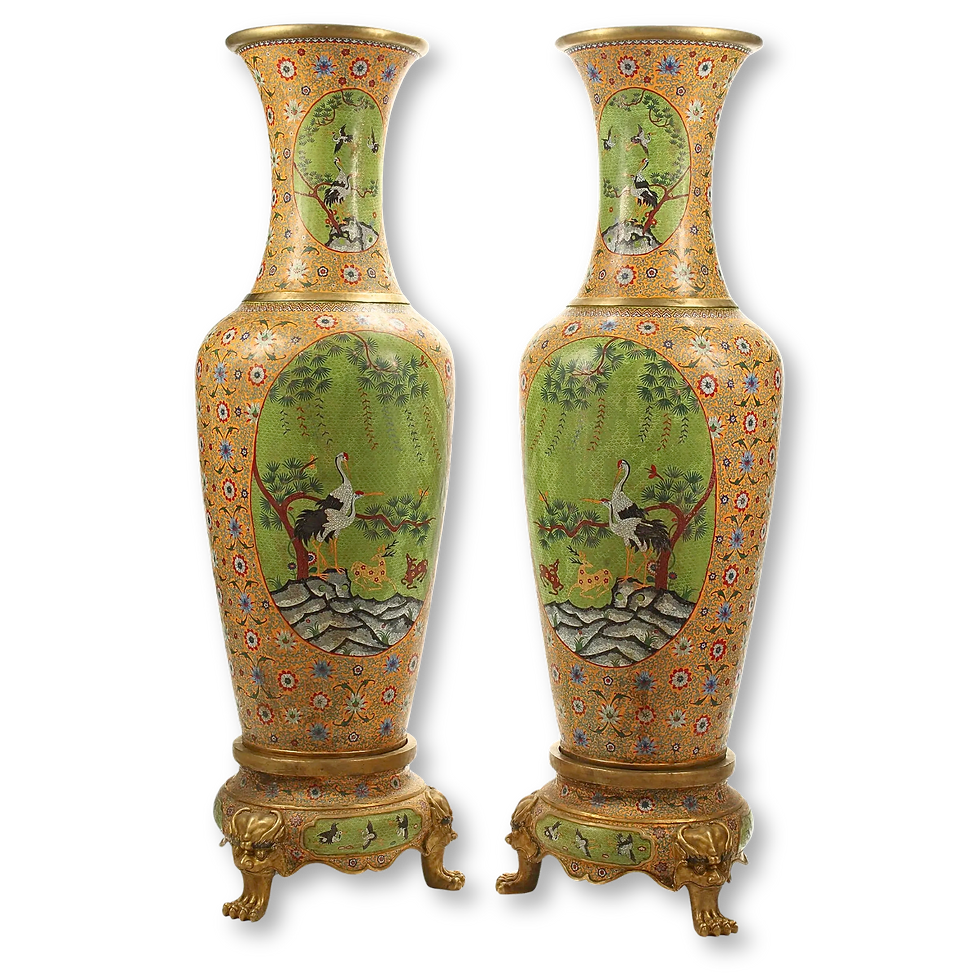
Cloisonné is a decorative technique in which colored enamels are set between fine metal wires to form vivid, jewel-like designs. Antique Chinese and Japanese examples are especially collectible. Austin Auction Gallery sells and appraises cloisonné.
What it's Worth
Value turns on age, origin, and craftsmanship. Decorative 20th-century pieces are modest; fine antique Chinese and Japanese examples with intricate wirework and rich enamels can reach the thousands and well beyond.
Decorative pieces $50-$400; fine antique examples $1,000-$15,000+.
Our Sold Results


Recently Sold
Overview & History
Cloisonné enamelwork - in which thin metal wires (cloisons) are soldered to a metal body and the cells filled with colored enamel - flourished in China and Japan and was also produced in Europe. Chinese cloisonné dates back centuries, while Japanese makers refined the art to extraordinary delicacy during the Meiji period. Quality is judged by the fineness of the wirework, the richness and control of the enamel colors, the complexity of design, and condition. Antique pieces by master workshops are prized, while later mass-produced wares are more common.
Identifying & Marks
Many pieces are unmarked; some carry Chinese reign marks, Japanese workshop signatures, or 'China'/'Japan' export marks. Judge quality by wire fineness, color depth, and design rather than marks alone.
FAQ
What is my cloisonné worth?
Value depends on age, origin, and craftsmanship. Later decorative pieces are modest, while fine antique Chinese and Japanese examples with delicate wirework and rich enamels can reach the thousands or far more. Request a free appraisal.
How can I tell if my cloisonné is antique?
Judge quality by the fineness of the wirework, the depth of color, and the complexity of design. Antique Japanese Meiji pieces are exceptionally fine; many later pieces are heavier and simpler. Marks are often absent, though some carry reign or workshop marks - our specialists can help.
How do I sell my cloisonné?
Austin Auction Gallery sells Asian works of art and offers free, no-obligation appraisals, connecting your pieces with collectors worldwide. Contact us to consign.